Elevator Guide Rails: A Comprehensive Guide
Elevator guide rails are crucial components ensuring smooth, safe vertical transport within buildings, adhering to stringent standards like EN 81-1 and TS EN 81-20.
Elevator guide rails represent a fundamental safety and operational element within vertical transportation systems. These steel components, often T-type or standard roller (SNS) configurations, meticulously direct the elevator car’s movement, ensuring a consistent and reliable journey. Their primary role extends beyond simple guidance; they actively absorb and distribute the car’s weight and dynamic loads, contributing significantly to overall stability.
Modern elevator design heavily relies on adherence to international standards, notably EN 81-1, EN 81-2, and the Turkish TS EN 81-20, which dictate precise specifications for rail material, installation, and performance. Furthermore, considerations for energy efficiency, as outlined in VDI 4707, are increasingly integrated into guide rail selection; Proper installation, often involving mounting from below (R1807.0), and consistent maintenance are paramount for long-term safety and functionality.
What are Elevator Guide Rails?
Elevator guide rails are the vertical steel tracks installed within an elevator hoistway, providing a structured pathway for the elevator car and its counterweight. Typically manufactured from specific steel grades – like B class, T70/B, or T75/B – they are designed to withstand substantial loads, ranging from 100kgs to 5000kgs, depending on the elevator’s capacity.
These rails aren’t merely passive guides; they actively participate in the elevator’s safe operation by preventing swaying or deviation. Configurations include T-type rails and standard roller guide rails (SNS), each suited to different elevator systems and installation requirements. Crucially, guide rails, along with their associated brackets like EPSS patented designs, must support synthetic application loads and be supported by at least two rails for optimal stability and safety, as per industry best practices.
The Primary Functions of Elevator Guide Rails
Elevator guide rails perform several critical functions, fundamentally ensuring the safe and reliable operation of the elevator system. Primarily, they vertically constrain the elevator car and counterweight, preventing lateral movement and maintaining alignment during travel. This precise guidance is essential for smooth passenger experience and operational efficiency.
Beyond guidance, guide rails actively contribute to safety. They are engineered to bear significant synthetic application loads, supporting the weight of the car, passengers, and any carried goods. Furthermore, they work in conjunction with safety components like buffers, which absorb kinetic energy during emergency stops, adhering to standards like EN 81-1 and EN 81-2. Maintaining proper alignment and structural integrity of these rails is paramount for consistent performance and adherence to safety regulations.
Types of Elevator Guide Rails
Elevator guide rails come in various configurations, including T-Type, Standard Roller (SNS) for mounting from below (R1807.0), and other specialized designs.
T-Type Elevator Guide Rails
T-Type elevator guide rails represent a common and versatile solution in elevator systems, particularly favored for their robust construction and effective load-bearing capabilities. Manufactured primarily from steel, these rails are available in a range of sizes – for example, B class, T 70/B, T 75/B, T 78/B, T82-3/B, and T89/B – to accommodate diverse carrying capacities, spanning from 100kgs to 5000kgs.
Their design facilitates secure installation within passenger elevators, contributing to the overall stability and smooth vertical movement of the car. The “T” shape provides enhanced rigidity, minimizing deflection under load. Manufacturers like SAFE ELEVATOR offer factory-direct pricing on customized T-Type rails, emphasizing quality and adherence to industry specifications. These rails are often selected for their antiseptic machined surface, promoting longevity and reducing maintenance needs within the elevator shaft environment.
Standard Roller Guide Rails (SNS)
Standard Roller Guide Rails (SNS) are a frequently utilized configuration, known for their adaptability and ease of installation. A key characteristic of SNS rails is their suitability for mounting from below, often referenced as R1807.0, streamlining the installation process and reducing on-site fabrication. These rails are designed to minimize friction between the elevator car and the guide rail surface, contributing to quieter operation and reduced wear and tear on both components.
SNS rails effectively support the elevator car, ensuring stable and reliable vertical travel. They are engineered to withstand substantial loads and maintain precise alignment within the hoistway. Proper installation and maintenance are vital for optimal performance, and adherence to relevant standards, such as EN 81-1 and EN 81-2, is paramount for safety and compliance.
Other Guide Rail Configurations
Beyond T-type and Standard Roller Guide Rails (SNS), various other configurations cater to specific elevator designs and operational requirements. While less common, these alternatives offer unique advantages in certain applications. Manufacturers like SAFE ELEVATOR provide customized solutions, including variations in rail size and material to accommodate carrying capacities ranging from 100kgs to 5000kgs.
These configurations often involve specialized brackets, like the EPSS patented design, enhancing applicability and simplifying installation. The selection process considers factors such as elevator speed, load, and hoistway dimensions. Regardless of the chosen configuration, all guide rail systems must adhere to stringent safety standards, ensuring they can reliably support the elevator car and withstand applied forces, as outlined in regulations like OSHA’s 1910.29.
Materials Used in Elevator Guide Rail Construction
Elevator guide rails predominantly utilize various steel grades, prioritizing strength, durability, and corrosion resistance for long-term performance and adherence to safety standards.
Steel Grades for Elevator Guide Rails
The selection of appropriate steel grades is paramount in elevator guide rail construction, directly impacting the system’s load-bearing capacity and overall safety. Commonly employed steels include carbon steel, alloy steel, and stainless steel, each offering distinct properties. Specific grades like B class, T 70/B, T 75/B, T 78/B, T82-3/B, and T89/B are frequently specified, denoting variations in tensile strength and yield point.
Manufacturers, such as SAFE ELEVATOR, meticulously choose materials to meet rigorous industry demands. The steel must withstand substantial forces generated during elevator operation and potential emergency scenarios. Factors considered include the elevator’s carrying capacity – ranging from 100kgs to 5000kgs – and the anticipated frequency of use. Proper material selection ensures the guide rails can reliably support the elevator car and its passengers, contributing to a secure and dependable vertical transportation system.
Material Strength and Durability
Elevator guide rails demand exceptional material strength and durability to consistently handle substantial loads and operational stresses. These components are subjected to continuous vertical forces, dynamic impacts, and potential wear over extended periods. Consequently, the chosen steel must exhibit high tensile strength, yield strength, and fatigue resistance.
The ability to withstand a synthetic application load is critical, necessitating support from at least two railways for optimal stability. Furthermore, guide rail brackets, like those patented by EPSS, contribute to overall structural integrity and ease of installation. Maintaining performance requires adherence to temperature limitations – below 40°C, with permissible peaks up to 100°C – ensuring the material properties remain consistent and reliable throughout the elevator’s lifespan.
Corrosion Resistance Considerations
Elevator guide rails operate within potentially corrosive environments, exposed to humidity, cleaning agents, and atmospheric contaminants. Therefore, corrosion resistance is a paramount concern in material selection and surface treatment. Steel grades utilized must resist rust and degradation to maintain structural integrity and ensure long-term safety.
Manufacturers often employ protective coatings, such as galvanization or specialized paints, to enhance corrosion resistance. Regular inspection is vital to identify any signs of corrosion, addressing them promptly to prevent structural weakening. The ‘antiseptic’ machined guide rail feature, as offered by SAFE ELEVATOR, suggests a focus on minimizing corrosion susceptibility. Maintaining a controlled hoistway environment, below 40°C and with brief peaks to 100°C, also contributes to mitigating corrosive effects and prolonging the rail’s service life.
Elevator Guide Rail Specifications & Standards
Elevator guide rail standards, including EN 81-1, EN 81-2, and TS EN 81-20, dictate buffer stroke, retardation, and safety rules for reliable operation.
EN 81-1 and EN 81-2 Standards
EN 81-1 and EN 81-2 represent foundational standards for elevator safety across Europe, significantly impacting guide rail specifications and performance requirements. EN 81-1 focuses on the construction and installation of elevators, outlining essential safety measures. Conversely, EN 81-2 details the safety rules for the design, manufacture, and installation of passenger and goods passenger lifts, directly influencing guide rail design and load-bearing capabilities.
These standards meticulously define requirements for buffer stroke and retardation levels, critical for absorbing kinetic energy during emergency stops. They ensure guide rails can withstand substantial forces, guaranteeing passenger safety. Adherence to these standards is paramount for manufacturers and installers, ensuring elevators meet stringent safety criteria. Proper guide rail installation, as dictated by these standards, is vital for the overall reliability and longevity of the elevator system.
TS EN 81-20 Standard (Turkey)
The TS EN 81-20 standard is the primary regulation governing elevator safety within Turkey, harmonized with European standards but tailored to Turkish regulations. This standard specifies comprehensive safety rules for the design, manufacture, installation, and maintenance of elevators, with significant implications for guide rail selection and performance. It dictates requirements for guide rail material strength, dimensional accuracy, and load-bearing capacity, ensuring structural integrity.
TS EN 81-20 also addresses critical safety features related to guide rails, including buffer stroke and retardation levels, mirroring the principles of EN 81-2. Compliance with this standard is legally mandated for all elevator installations in Turkey, guaranteeing a high level of passenger safety. Regular inspections and adherence to maintenance schedules, as outlined by TS EN 81-20, are crucial for maintaining guide rail functionality and preventing failures.
VDI 4707: Elevator Energy Efficiency
VDI 4707 represents the world’s first elevator energy efficiency certification standard, impacting component selection, including elevator guide rails. While not directly specifying guide rail materials, it influences design choices aimed at minimizing friction and optimizing overall system performance. Lower friction between the guide rails and elevator car contributes to reduced energy consumption during operation.
Optimized guide rail alignment and smooth surfaces, achievable through precise manufacturing and installation, are indirectly encouraged by VDI 4707. This standard promotes holistic energy-saving strategies, where even seemingly minor components like guide rail brackets (e.g., EPSS patented brackets) play a role in reducing energy waste. Maintaining appropriate hoistway temperatures, below 40°C as per related guidelines, also supports efficient operation and guide rail longevity, aligning with VDI 4707’s principles.
Installation and Support of Guide Rails
Elevator guide rails require minimum support from two railways, ensuring stability and load capacity, with methods like mounting from below (R1807.0) being common.
Minimum Support Requirements (Two Rails)
Ensuring the safe and reliable operation of any elevator system fundamentally relies on the adequate support of its guide rails. A core principle in elevator guide rail installation dictates that these rails must be supported by at least two railways. This dual-rail support isn’t merely a recommendation; it’s a critical safety requirement designed to distribute the substantial loads encountered during elevator operation effectively.
These synthetic application loads, encompassing the weight of the elevator car, passengers, and any carried cargo, demand a robust support structure. The two-rail system provides redundancy, mitigating the risk of failure should one rail experience localized stress or damage. Proper support prevents excessive deflection or vibration, contributing to a smoother, quieter ride and extending the lifespan of the guide rails and associated components.
Furthermore, adhering to this minimum support requirement is essential for compliance with relevant safety standards, such as EN 81-1 and EN 81-2, guaranteeing passenger safety and regulatory approval.
Installation Methods: Mounting from Below (R1807;0)
The mounting of elevator guide rails from below, designated as method R1807.0, represents a common and efficient installation technique, particularly suited for standard roller guide rails (SNS). This approach involves securing the rails to the elevator pit structure, providing a stable foundation for the entire vertical travel system. Careful consideration must be given to the pit’s structural integrity to ensure it can adequately bear the load imposed by the elevator and the guide rails.
Proper alignment during this installation phase is paramount. Precise leveling and straightness are crucial for smooth elevator operation and to prevent premature wear on the guide shoes and rails themselves. Utilizing specialized tools and techniques, installers meticulously position and fasten the rails, ensuring they are perfectly vertical and parallel.
This method often simplifies access for future maintenance and inspection, contributing to the long-term reliability of the elevator system.
Importance of Proper Alignment
Elevator guide rail alignment is absolutely critical for ensuring safe, efficient, and reliable elevator operation. Misalignment introduces undue stress on the guide shoes, leading to accelerated wear and tear, increased noise levels, and potentially hazardous vibrations. Even minor deviations from verticality or parallelism can compromise the entire system’s performance.
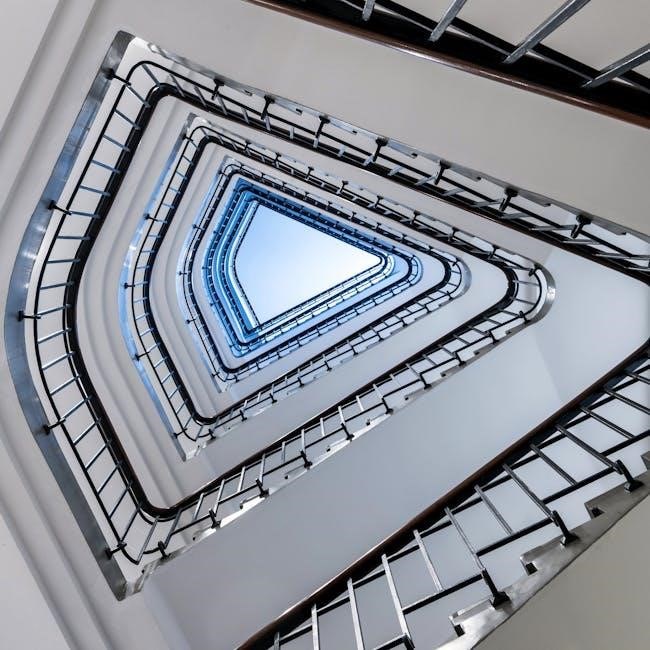
Precise alignment minimizes friction between the guide shoes and the rails, reducing energy consumption and extending the lifespan of both components. It also prevents binding, which can cause jerky movements and potentially trigger safety mechanisms. Regular checks during installation and maintenance are essential to verify and correct any alignment issues.
Maintaining proper alignment directly contributes to passenger comfort and safety, upholding the stringent requirements outlined in standards like EN 81-1 and EN 81-2.

Safety Considerations & Regulations
Guide rail systems must withstand at least 200 lbs (890 N) force, and temperatures should remain below 40°C, with peaks up to 100°C.
Guardrail System Strength Requirements (200 lbs/890 N)
Ensuring passenger safety is paramount, and a critical aspect of this revolves around the structural integrity of elevator guardrail systems. Regulations, as outlined by Occupational Safety and Health Administration (OSHA) standard 1910.29, dictate that these systems must be robust enough to withstand significant force without failure. Specifically, guardrails are required to endure a minimum downward or outward force of 200 pounds (890 Newtons) applied within a 2-inch (5 cm) radius of the top edge, at any point along the rail’s length.
This requirement isn’t arbitrary; it accounts for accidental impacts and ensures the guardrail effectively prevents falls or the dislodgement of objects within the elevator shaft. Proper design, material selection, and installation are therefore essential to meet these stringent safety criteria. Regular inspections are also vital to confirm continued compliance and identify any potential weaknesses before they compromise safety.
Buffer Stroke and Retardation Levels
Elevator safety relies heavily on effective speed control and stopping mechanisms, particularly in emergency scenarios. Buffers, crucial safety components, absorb kinetic energy during overspeed or emergency descent, preventing hard impacts. Standards like EN 81-1 and EN 81-2 define specific requirements for buffer stroke – the distance the buffer compresses during activation – and retardation levels, which dictate the rate at which the elevator car decelerates.
These parameters are carefully calculated based on elevator weight, travel speed, and shaft dimensions. Insufficient buffer stroke or inadequate retardation can lead to dangerous jolts or even complete failure of the stopping system. Proper buffer maintenance, including regular inspection for wear and tear, is essential. Adherence to these standards ensures a controlled and safe stop, protecting passengers and minimizing potential damage to the elevator equipment.
Temperature Limitations (Below 40°C, Peaks to 100°C)
Maintaining optimal elevator performance necessitates careful consideration of environmental temperature. Elevator hoistway temperatures should ideally remain below 40°C (104°F) for consistent operation and component longevity. However, brief temperature peaks up to 100°C (212°F) are generally permissible, acknowledging potential fluctuations within the shaft environment.
Extreme temperatures, particularly prolonged exposure to heat, can affect material properties of guide rails and related components, potentially compromising their structural integrity. For installations in regions experiencing sub-zero temperatures, specialized considerations are required to prevent material embrittlement. Consistent monitoring and adherence to these temperature guidelines are vital for ensuring reliable and safe elevator functionality, preventing unexpected failures and maintaining passenger safety.
Guide Rail Accessories & Components
EPSS patented brackets, robust fasteners, and precisely engineered joints and splices are essential components, ensuring secure and reliable elevator guide rail systems.
EPSS Patented Guide Rail Brackets
EPSS patented guide rail brackets represent a significant advancement in elevator installation and safety technology. These brackets are specifically designed for strong applicability and facilitate remarkably easy installation, streamlining the process for technicians and reducing on-site labor time. Their innovative design ensures a secure and stable connection between the guide rails and the hoistway structure, contributing to the overall reliability of the elevator system.
The key benefit of EPSS brackets lies in their ability to accommodate various mounting configurations and structural irregularities, making them adaptable to a wide range of elevator installations. This versatility minimizes the need for custom fabrication or modifications, further simplifying the installation process. Furthermore, the patented design enhances load distribution, improving the overall structural integrity and safety of the elevator guide rail system. They are a critical component in modern elevator safety systems.
Fasteners and Connectors
Elevator guide rail systems rely heavily on high-strength fasteners and connectors to ensure structural integrity and operational safety. These components must withstand significant dynamic loads and vibrations inherent in elevator operation, maintaining a secure connection between rail sections and support brackets. Selection of appropriate fasteners is paramount, considering material compatibility, tensile strength, and corrosion resistance.
Connectors are crucial for joining rail segments, ensuring a smooth and continuous guiding surface for the elevator car. Proper alignment and secure fastening of these connectors are essential to prevent misalignment or instability. Manufacturers often specify particular fastener types and tightening torques to guarantee optimal performance and adherence to safety standards. Regular inspection of these connections is vital during maintenance to identify and address any loosening or corrosion, preserving the elevator’s safe operation.
Joints and Splices
Elevator guide rail systems necessitate carefully engineered joints and splices to accommodate rail sections during installation and maintenance. These connections must maintain the rail’s structural continuity, preventing any disruptions to the elevator car’s smooth and safe travel. Splices are typically designed to overlap and bolt together, distributing loads effectively and minimizing stress concentrations.
Proper alignment of rail sections at joints is critical; even slight misalignments can cause vibrations, noise, and premature wear on the elevator components. Manufacturers provide detailed instructions for preparing and connecting rail segments, including specific torque requirements for fasteners. Regular inspection of these joints is essential to identify any loosening, corrosion, or deformation. Maintaining the integrity of these connections directly contributes to the overall reliability and safety of the elevator system, adhering to established standards.

Maintenance and Inspection
Elevator guide rail upkeep involves regular checklists, wear identification, and lubrication to ensure continued safe operation and adherence to standards.
Regular Inspection Checklists
Comprehensive elevator guide rail inspections are paramount for maintaining passenger safety and operational reliability. Checklists should meticulously document visual assessments for any signs of wear, corrosion, or damage along the entire length of the rails. Specifically, inspectors must verify the secure attachment of all brackets – like EPSS patented designs – and fasteners, ensuring they meet specified torque requirements.
Alignment is critical; deviations from plumb or level must be recorded and addressed promptly. Detailed notes should be taken regarding any unusual noises during elevator operation, potentially indicating rail-to-bracket or rail-to-shoe interaction issues. Furthermore, the inspection must confirm adequate lubrication levels, preventing premature wear and ensuring smooth elevator travel. Documentation of these findings, including photographs, is essential for tracking maintenance history and identifying potential long-term concerns, adhering to standards like EN 81-1 and EN 81-2.
Wear and Tear Identification
Identifying wear and tear on elevator guide rails requires a keen eye and understanding of typical failure modes. Common indicators include localized deformation, pitting, or cracking of the rail surface, particularly at bracket attachment points. Excessive wear on the rail profile, caused by shoe contact, signifies misalignment or inadequate lubrication.
Inspectors should also look for signs of corrosion, especially in humid environments, which can compromise the rail’s structural integrity. Worn or loose brackets, such as those utilizing EPSS technology, contribute to instability and accelerated wear. Documenting the extent and location of any damage is crucial. Ignoring these signs can lead to unsafe operating conditions and costly repairs, potentially violating standards like EN 81-1 and EN 81-2. Regular monitoring helps predict replacement needs and prevent catastrophic failures.
Lubrication Requirements
Proper lubrication is paramount for maintaining the longevity and smooth operation of elevator guide rails. Consistent application reduces friction between the guide shoes and rails, minimizing wear and tear, and ensuring efficient energy consumption as per VDI 4707. The frequency and type of lubricant depend on factors like elevator usage, environmental conditions, and rail material.
Generally, a high-quality, long-lasting lubricant designed for heavy-duty applications is recommended. Automated lubrication systems are increasingly common, providing consistent and controlled application. Avoid over-lubrication, as it can attract dust and debris, creating abrasive paste. Regular inspection of lubrication points and replenishment as needed are vital. Failure to adhere to lubrication schedules can lead to increased noise, vibration, and ultimately, premature rail failure, compromising safety.